
TL;DR
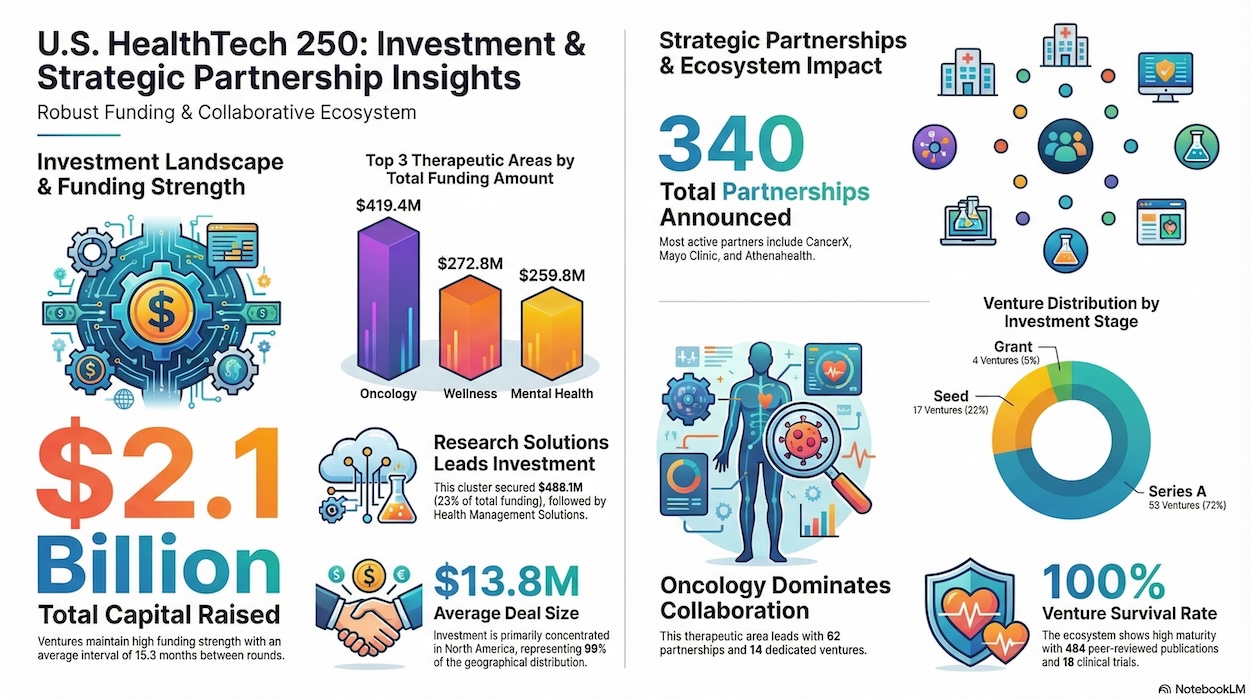
- A Data-Driven Snapshot: This year’s HealthTech 250 U.S. cohort (data as of 1 Feb 2026) showcases 75 U.S.-based, early-stage (Pre-Seed to Series A) digital health startups selected via a rigorous, healthcare-native methodology.
- Operations Over Hype: The digital health ecosystem is moving beyond TechBio; substantial funding is now flowing into Health Management Solutions (19% of the cohort) that focus on addressing broken hospital logistics, administrative burnout, and workflow inefficiencies.
- The End of “Disease Agnostic”: Startups are abandoning broad, catch-all platforms. Deep specialization is the new standard, with 62% of the cohort focusing on narrow, specific therapeutic areas like Mental Health and Women’s Health.
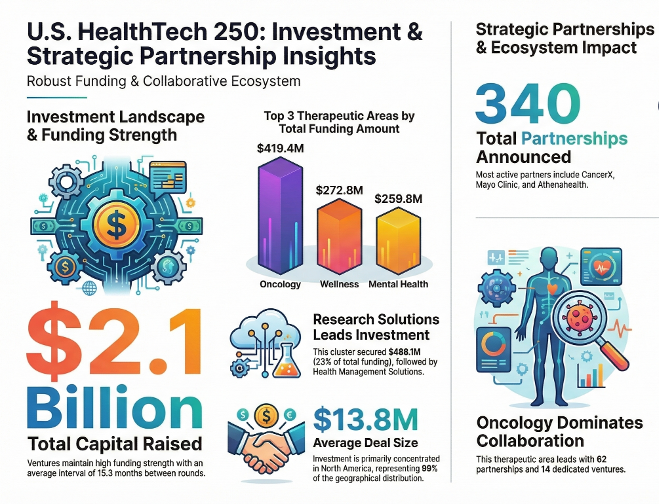
- Oncology Dominates: Oncology is the clear leader in digital health innovation, featuring the most ventures, the highest funding ($419 million), and the largest volume of industry partnerships.
- Designed for Decision-Grade Diligence: Built for precision, not media heat, the list utilizes waterfall eligibility filters, geography-normalised percentile benchmarking, and a weighted scoring model encompassing relevance, evidence, partnerships, funding context, momentum, and health checks.
Cutting Through the Noise: Inside the HealthTech 250 U.S. Cohort
The digital health ecosystem has historically been characterized by extreme peaks of media hype, followed by valleys of clinical disillusionment. For years, massive funding rounds and charismatic storytelling overshadowed the actual fundamental building blocks of healthcare innovation: clinical evidence, sustainable business models, and operational utility. However, as we examine the early-stage digital health landscape in 2026, the paradigm has definitively shifted.
Galen Growth is thrilled to unveil insights from the U.S. cohort of Galen Growth’s 2026 edition of the HealthTech 250 (data as of 1 February 2026), powered by HealthTech Alpha. This highly curated list showcases 50 US-based, early-stage (Pre-Seed to Series A) digital health ventures that represent the actual, unglamorous, yet transformational work of rewiring the healthcare industry.
These are not the loudest companies; they are the most effective. By shifting our lens away from raw data points and toward the strategic insights driving these ventures, a clear picture emerges of where healthcare is going.
Forget TechBio: Ventures Pivot to Fix Broken Hospital Operations
In recent years, the industry’s imagination (and capital) was heavily captured by TechBio—the application of computational technologies to drug discovery and biology. While discovering novel therapeutics remains crucial, a stark realization has hit the market: a revolutionary new drug means very little if the hospital system delivering it is collapsing under the weight of administrative bloat and workforce burnout.
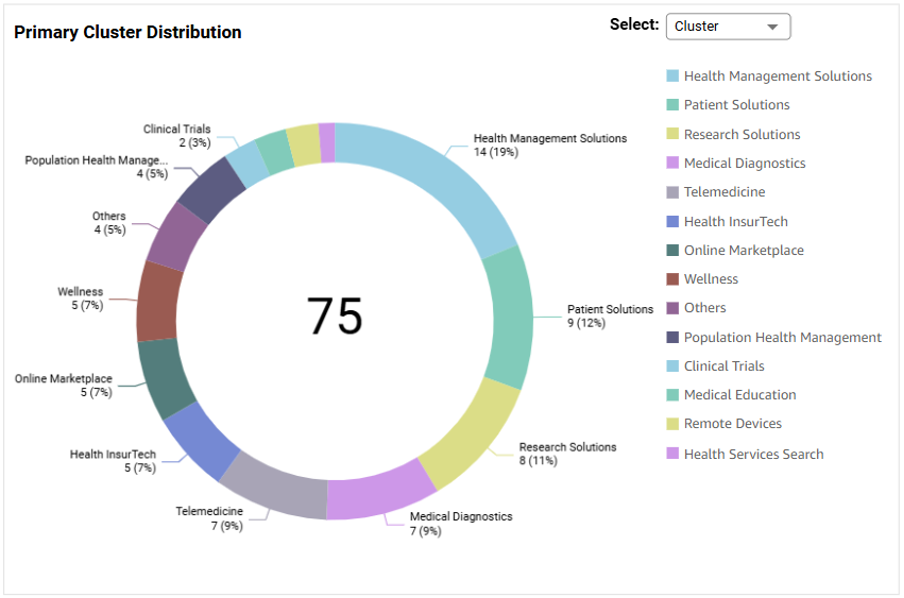
The 2026 US cohort reveals a major strategic pivot toward solutions that address inefficiencies in everyday healthcare operations. Health Management Solutions now represent the second-largest segment by volume (19% of the cohort), backed by $265.2 million in funding.
- Combating Burnout and Optimizing the Workforce: Startups are tackling hospital “alarm fatigue” and workforce shortages using AI-powered operational health scoring, bed management, resource allocation, and automated scheduling.
- Rewiring Payments and Administration: Ventures are building operating systems that allow organizations to purchase healthcare directly and pay providers in real time while automating complex processes such as prior authorization.
- Unlocking Unstructured Data: Large Language Models (LLMs) are increasingly used to generate after-visit summaries, SOAP notes, and clinical documentation, helping return physician time back to patient care.
The insight is clear: true disruption in healthcare is increasingly about optimizing the system that delivers care.
The Shift Toward Narrow, Therapeutic-Specific Areas
For years, the digital health playbook emphasized broad “disease-agnostic” platforms. The 2026 cohort demonstrates that clinical adoption favors deep specialization instead.
An estimated 62% of this cohort is disease-specific, focusing on clearly defined therapeutic areas.
- Mental Health Innovation: With $260 million in funding, ventures are delivering specialized solutions ranging from treatments for gambling addiction to bioelectronic implants for severe psychiatric disorders.
- Closing the Women’s Health Gap: Backed by $193 million, companies are developing microbiome diagnostics and FDA-cleared digital therapeutics for pelvic floor disorders.
- Integrated Chronic Care: Solutions targeting diabetes and cardiometabolic disease are increasingly combining diagnostics, prescriptions, and monitoring into unified treatment models.
In digital health, niche expertise is rapidly becoming the new path to scale.
The Undisputed Heavyweight: Oncology
Among all therapeutic areas represented in the cohort, oncology stands out as the dominant innovation category.
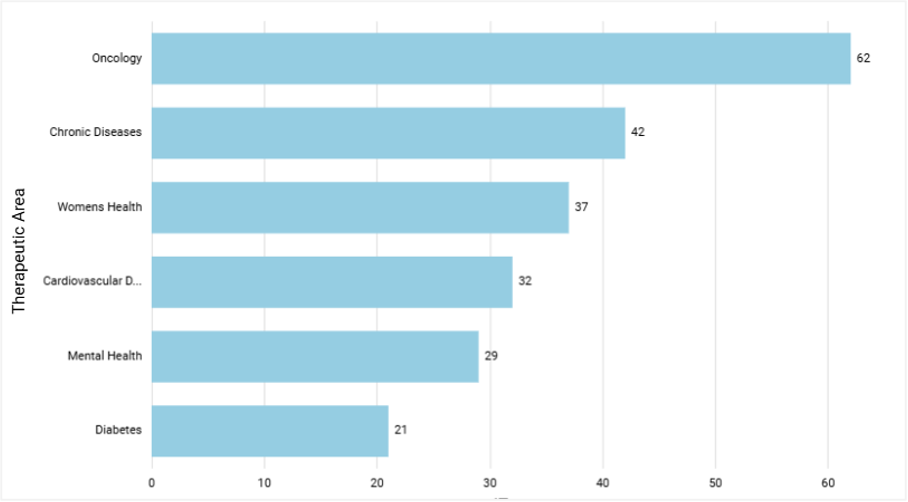
The cohort includes 14 oncology-focused ventures, supported by $419 million in funding and 62 industry partnerships.
- Precision Diagnostics and Drug Discovery: Startups are combining genomic data and AI to advance precision immunotherapy research.
- Democratizing Clinical Trials: Digital platforms are enabling community providers to match patients with clinical trials at the point of care.
- Improving Patient Navigation: Real-time analysis of pathology reports helps identify suspicious findings earlier and accelerates treatment decisions.
Oncology has become the proving ground for data-driven, patient-centric digital health innovation.
Methodology: Built for Decision-Grade Diligence
The HealthTech 250 prioritizes signal over hype through a rigorous two-stage methodology.
- Universe Definition & Filtering: Ventures must be incorporated between 1 January 2021 and 1 February 2026 and remain within Pre-Seed to Series A funding stages.
- Geography-Normalised Benchmarking: Companies are evaluated against peers within their regional ecosystems to ensure fair comparison.
- Weighted Scoring Model: Selection considers relevance, clinical evidence, partnerships, funding context, momentum, and operational health.
What This Means for Healthcare Corporates
With 340 partnerships already active, collaboration between corporates and startups is becoming essential.
- Healthcare Providers: Hospitals must adopt technologies that improve logistics, workforce automation, and operational efficiency.
- Pharmaceutical Companies: Drug developers must integrate with AI-enabled infrastructure and digital trial recruitment networks.
- MedTech Companies: Hardware innovation increasingly depends on intelligent software integration and connected clinical workflows.
- Payers: Insurance organizations must accelerate claims automation, prior authorization systems, and value-based care optimization.
Conclusion
The U.S. ventures in the 2026 HealthTech 250 represent a maturing digital health ecosystem focused on operational impact, therapeutic specialization, and oncology innovation.
Supported by geography-normalised benchmarking and healthcare-native scoring models, the cohort highlights startups delivering measurable clinical and operational value.
Download the HealthTech 250 U.S. list: https://www.galengrowth.com/healthtech250-2026/