Executive Summary
Successful digital health market entry in 2026 requires far more than an innovative product. Health systems, pharmaceutical companies, payers and investors increasingly expect clinical evidence, interoperability, regulatory readiness and a compelling commercial value proposition before adopting new technologies. The most successful health tech startups combine robust market intelligence with a structured market entry strategy that validates demand, prioritises the right customer segments and identifies the partnerships that accelerate adoption. This guide presents the Galen Growth Digital Health Market Entry Framework™, providing founders and investors with a practical, evidence-based roadmap for entering one of healthcare’s most competitive markets.
Key Takeaways
- Validate market demand before investing heavily in product development.
- Build regulatory, interoperability and clinical evidence strategies from day one.
- Focus on one customer segment before expanding.
- Strategic partnerships often determine commercial success more than technology alone.
- Continuous market intelligence is essential to stay ahead in rapidly evolving digital health trends.
Why This Matters
Healthcare organisations are no longer searching for interesting technologies—they are seeking solutions that integrate seamlessly into clinical workflows, demonstrate measurable outcomes and fit established procurement processes.
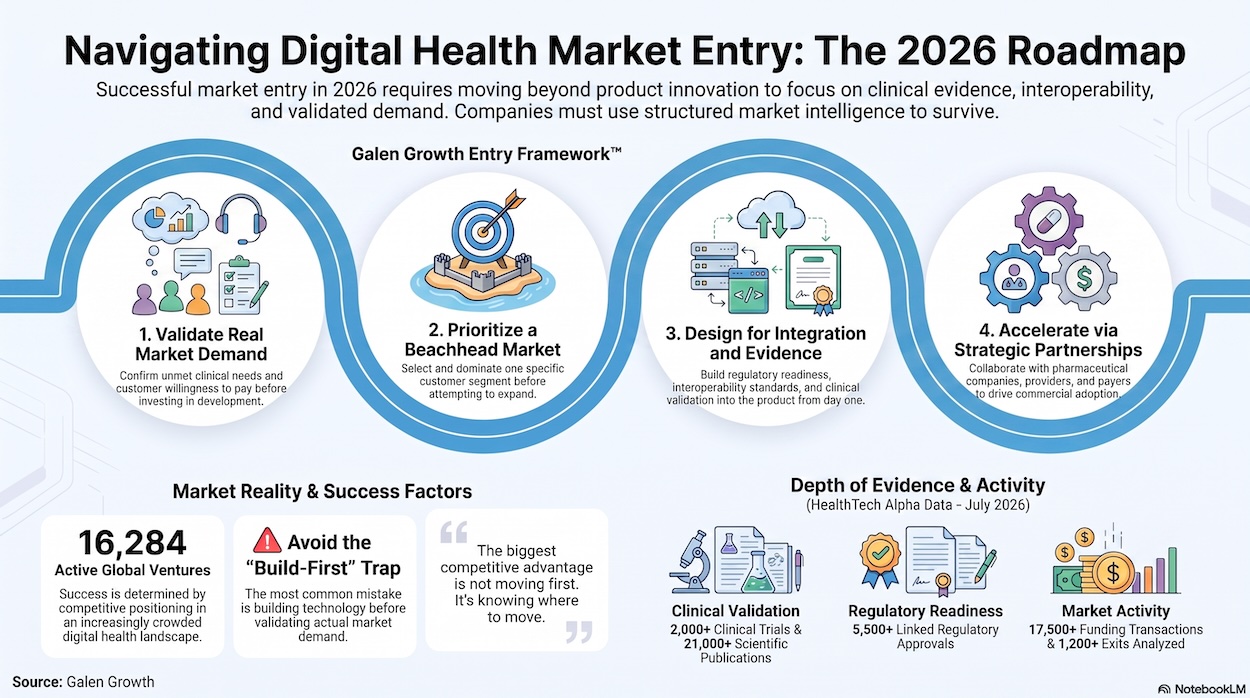
With 16,284 active digital health ventures currently tracked by HealthTech Alpha, founders and investors face an increasing competitive landscape. Success is determined by understanding where demand exists, how competitors are positioned, what evidence buyers expect and which partnerships accelerate adoption.
The Galen Growth Digital Health Market Entry Framework™
- Market Demand
- Competitive Landscape
- Regulatory & Interoperability Readiness
- Evidence Strategy
- Partnership Strategy
- Commercial Execution
- Continuous Market Optimisation
The Seven Steps
Step 1. Validate Real Market Demand
Understand unmet clinical needs, reimbursement, procurement pathways and customer willingness to pay.
Best practice: Combine customer discovery with funding, partnership and competitive intelligence.
Step 2. Select the Right Customer Segment
Prioritise one beachhead market before expanding.
Step 3. Build for Regulatory and Interoperability Success
Design products around healthcare standards, cybersecurity and integration from day one.
Step 4. Develop an Evidence Strategy Early
Plan clinical validation, regulatory evidence and health economic outcomes alongside product development.
Step 5. Build Strategic Partnerships
Collaborate with pharmaceutical companies, providers, payers and health systems to accelerate adoption.
Step 6. Monitor the Market Continuously
Track funding, partnerships, exits, evidence and regulatory developments.
Step 7. Refine Your Market Entry Strategy
Treat market entry as an ongoing process driven by market intelligence and performance data.
Comparison
HealthTech Alpha supports: – Market demand assessment – Competitor benchmarking – Clinical evidence tracking – Partnership intelligence – Regulatory monitoring – Continuous market intelligence
HealthTech Alpha Market Snapshot (July 2026)
- 16,284 active digital health ventures tracked globally
- 17,500+ funding transactions analysed
- 16,000+ digital health products mapped
- 5,500+ regulatory approvals linked to digital health products
- 2,000+ clinical trials associated with tracked ventures
- 21,000+ peer-reviewed scientific publications linked to digital health innovators
- 1,200+ digital health exits analysed
- Thousands of venture–corporate partnerships monitored globally
Four Common Mistakes
- Building technology before validating demand
- Assuming regulatory approval guarantees commercial success
- Underestimating interoperability and procurement
- Treating market entry as a one-time launch
Best Practice Checklist
- Validate demand
- Focus on one segment
- Design for interoperability
- Generate evidence early
- Build strategic partnerships
- Monitor the market continuously
- Use specialist healthcare intelligence
“In digital health, the biggest competitive advantage is not moving first. It’s knowing where to move.”
FAQ
What is digital health market entry? The structured process of commercialising healthcare technology through validated demand, regulatory readiness, evidence generation and adoption.
Why is specialist intelligence important? It enables better strategic decisions using structured healthcare-specific data.
Audience
- HealthTech founders
- Digital health investors
- Corporate innovation teams
- Business development leaders
- Competitive intelligence teams
Related Guides
- Healthcare Innovation Data Sources in 2026
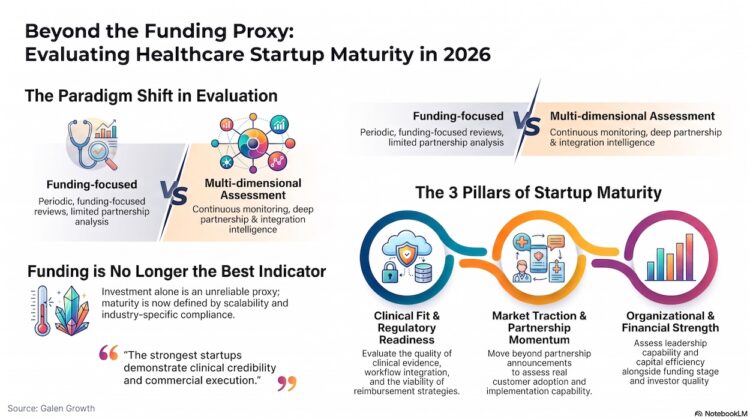
- How to Evaluate Healthcare Startup Maturity in 2026
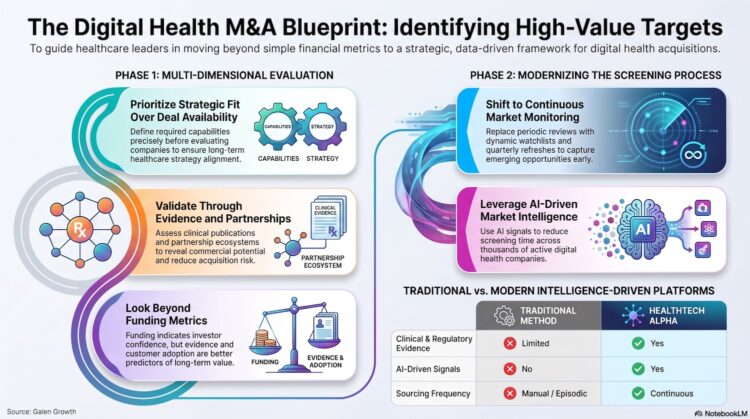
- How to Identify Digital Health M&A Targets
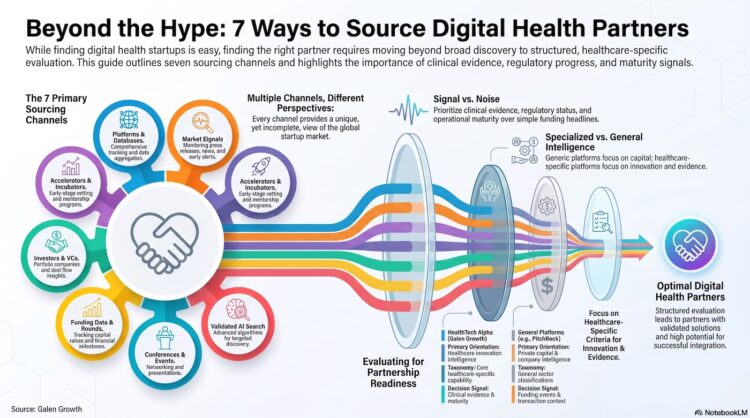
- 7 Ways Healthcare Companies Find Digital Health Startups
- Digital Health Competitors and Alternatives
Call to Action
See how leading healthcare organisations evaluate digital health markets.
Request a personalised walkthrough of HealthTech Alpha.